
Why Community (and the Arts) Might Be the Answer
Finding Your People: How the Arts Create Community (and Might Just Save the World)
So, it probably doesn’t surprise you to know that I think about community all the time - because I wholeheartedly believe it’s the antidote to almost everything, ever. I know people who feel unseen, who don’t know where they belong. Who crave connection but don’t know where to find it. Maybe you’ve felt that too?
It’s gotten me wondering...
What if we were raised to believe that vulnerability is strength, that power comes from empathy, not money? What if courage wasn’t tied to ‘having the balls’, and we valued connection over competition? Imagine if kids grew up knowing their voices mattered, that they had the right to express their needs and be themselves.
Maybe they’d be better at holding space for others to do the same. Maybe we wouldn’t have politicians peddling transphobia or world leaders wielding power like a weapon. Maybe women’s rights wouldn’t be getting stripped away. Maybe First Nations communities wouldn’t still be fighting for justice, recognition, and the right to self-determination on stolen land. Maybe disabled people wouldn’t have to fight for basic access, dignity, and the right to exist without barriers. Maybe LGBTQIA+ people wouldn’t have to keep fighting for the rights they already won - or have had to fight at all.
Maybe we wouldn’t have presidents and billionaires controlling the media just to broadcast them comparing the size of their… egos.*
The Weight of the World (And How We Carry It Anyway)
It’s easy to feel helpless in the face of all this. I do, all the time. What can we do when up against such powerful forces determined to tear down the love left in the world? Where do we find the energy when we’re already exhausted?
I don’t have the answer, but I do know this: small waves still make ripples. And I believe - fiercely - that community and connection are how we heal.
I’ve seen it firsthand, in and out of the dark. Every Monday night for over a decade, No Lights No Lycra has been a space where people connect in the dark through dance. No words, no judgment - just movement and music. The first time I danced in the dark, something shifted. The music wasn’t just playing around me - it was moving through me and making me move in all sorts of new ways. I was changed. Ecstatic! And I knew: I wanted more of this. I wanted to bring this feeling to as many people as possible. And I see it happening! Each week, people arrive with whatever they’re feeling on the day and leave GRINNING - sometimes lighter, sometimes glowing, sometimes they’ve cried, sometimes they’ve transformed, usually they’re very sweaty.
I was struck by community and the connection and healing it can bring the weekend before last, when I performed with my (kickass community) choirHengeQueensfor International Women’s Day: A Choir Extravaganza. A bit of a surprise highlight for me was the performance of our ‘diversity hire’ - Fremantle's VoiceMale. I love that the instruction (challenge?) was issued to them (and all choirs on the lineup) to only perform works created by women and non-binary artists. Watching this men’s choir perform on IWD, I thought about how powerful it was to see men demonstrating what connection and community looks like.
Because my sense is, if more men had spaces like that – space to express themselves, with all the lovely benefits of being in and performing music with others - we might not be in the mess we’re in now where we need things like International Women’s Day. Maybe we’d have less leaders clinging to power through division and more collectivist change led with empathy and valuing diverse experiences.
You might have noticed that I have some big feelings about this community stuff but stick with me here. The power of connection - whether through dance, music, or shared experience - isn’t just something we feel. It’s something science backs up.
The Science of Connection
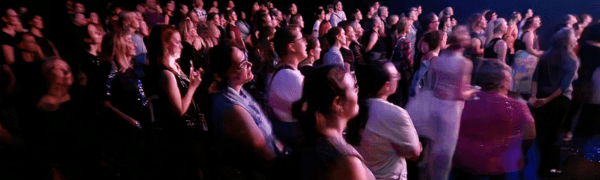
I recently came across thisvideo by Jane Fonda (yes, that Jane Fonda), where she speaks about ageing and how it can be done well, and in how a strong community is one of the biggest factors in living a long and happy life. Studies show that people with positive beliefs about aging live an average of 7.5 years longer - and connection is what shapes those beliefs. Specifically, we know that communities involving participatory art activities are the ones with the greatest health benefits.
Engaging in the arts isn’t just personally fulfilling - it strengthens communities. ANational Endowment for the Arts studyfound that older adults in creative spaces such as dancing groups (hint: just like NLNL!) experience less loneliness and even visit the doctor less often. But this isn’t just about ageing - loneliness is a public health crisis at every stage of life. In a world where disconnection fuels despair, participatory arts give us shared purpose.
But do we know that NLNL is actually doing this? Check this out: AUniversity of Sydney studyon NLNL found that:
95% of participants reported improvements in their physical health.
97% said their mental health benefited from dancing in the dark.
Half of the participants had been diagnosed with depression or anxiety, highlighting just how valuable spaces like this can be for mental wellbeing.
Whether it’s dancing, music, painting, or even flower arranging—when we create together, we belong. And belonging is what keeps us going.
How Can Dancing in the Dark Create Community? (Especially when we’re not allowed to talk?!)
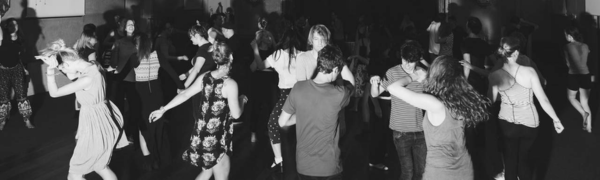
Look, fair question. It’s a tricky thing to explain to the uninitiated. But what we’ve learned is - you don’t need words to belong. The absence of small talk actually deepens the connection, making it about presence, not performance.
Turning the lights out is an equalising experience. AsEleanor Gordon Smith writesabout dancing in the dark, “We’re so used to seeing our bodies in a limited set of roles. Is it attractive, is it physically fit, can it perform the tasks I need it to? Even when you’re dancing in front of people, you’re evaluating it. But there’s a whole spectrum of physical fun out there we don’t play around in much as adults. Never mind successful dancing, I mean just fun – reminding yourself that you can be silly and big and spontaneous and energetic the way kids are.”
Dancing at NLNL frees us from judgment, letting us move, feel, and express ourselves without inhibition. That level of uninhibited expression is a rare and precious gem, and when you’re in a space where everyone is embracing that same freedom, a unique kind of community forms - one based on trust, presence, and acceptance.
And the connection doesn’t stop when the music does. Whether you attend alone or with friends, people chat before the session, and they leave with that post-dance glow, often bubbling over with how they’re feeling, and that sense of connectedness stays with you.
I see evidence of all of these things. Every. Single. Week.
A dancer once told me “I had had two kids in two and a half years, and…my body was just no longer mine and I thought it never would be again. It sounds so strange, but the first time I danced in the dark I realised how amazing my floppy, wobbly, unrecognisable post babies body was. It had grown two humans and I could still move it in a way that gave me joy, just me by myself. We reconnected in the dark that night, my body and me, and I finally felt whole again. NLNL gave me myself back.”
Another dancer wrote to me as he was moving to Melbourne, “We are all a community at NLNL, and together that collective energy, excitement and love of dance is what makes each and every time so special. It's so great to leave soaked in sweat but also clear-headed and relaxed. NLNL Perth will always have a special place in my heart as the place where I fell back in love with dance, but learned to appreciate it in a totally different way.”
These moments happen not because we're talking through problems, but precisely because we're not. The body speaks when given permission, and the darkness gives that permission.
So… Will the Arts Save the World?
I mean, maybe. Or maybe that’s too big a question. But what I do know is this: community, connection, and creativity will keep us going. They will remind us of who we are and what we’re capable of. They will help us feel seen, supported, and part of something larger than ourselves.
And that’s not nothing. That’s everything.
So if the world feels heavy, if the news cycle is bleak, if the fight for a better future feels overwhelming - find your people. Show up. Move. Create. Dance in the dark. Sing in a choir. Paint, write, express. Remind yourself: you don’t have to be good at art for art to be good for you. Let joy be a radical act of resistance. Let community be the answer. Because every time we come together, even in the smallest ways, we create something powerful.
And that, my friends, is how we start to save the world.
_______ * This is, of course, a reference to what’s often called a ‘dick measuring contest’—but let’s be real: any conversation valuing the size of one’s genitals is body-shaming, transphobic, and ultimately serves no one. Just wanted to be clear on that!
If you’re craving a place to let go, connect, and feel truly free - come dance with us.
No expectations, no judgment. Just movement, music, and community in the dark. This is an hour of freedom just for you - dancing in complete darkness to carefully curated playlists that span genres and decades. Full details can be found here.
📅 Monday nights – 6:30pm & 7:45pm
📍 Leederville Town Hall, 84 Cambridge St
🎟️ Tickets $12 standard / $10 concession
🩷 Companion cards welcome!
Cover image: The Amazing Marnie Richardson
References
- Instagram Reel: Jane Fonda on aging and social connection
- Cohen, G. D., & The Center on Aging, Health & Humanities, The George Washington University (GW) (2006). The Creativity and Aging Study: The Impact of Professionally Conducted Cultural Programs on Older Adults. , (). Retrieved fromhttps://hsrc.himmelfarb.gwu.edu/son_ncafacpubs/2
- University of Sydney. (2019, July 26). Dancing in the dark could have benefits for health and wellbeing. University of Sydney News. Retrieved from https://www.sydney.edu.au/news-opinion/news/2019/07/26/dancing-in-the-dark-could-have-benefits-for-health-and-wellbeing.html
- Gordon-Smith, E. (2025, February 28). Strangers mock my moves. How can I regain confidence on the dancefloor? The Guardian.https://www.theguardian.com/lifeandstyle/2025/feb/28/strangers-mock-my-moves-how-can-i-regain-confidence-on-the-dancefloor
- Makeshift. (n.d.). About us.Retrieved fromhttps://www.makeshift.org.au/about

Bryony Calendar
Dance Commander
"If you can dance and be free and not embarrassed you can rule the world.” ~Amy Poehler
Corroborees and Nyumbis have been taking place on this land for more than 65,000 years as an essential part of the cultural and spiritual life of Aboriginal and Torres Strait Islander people. NLNL is held on Whadjuk Noongar Country, and we express our gratitude and respect to elders past and present for tending to the land and waters so that we may be here today. Always was, always will be, Aboriginal land.
C/O Unit 10, 8 Davallia Road
DUNCRAIG, WA, 6023


All rights reserved ® No Lights No Lycra Perth~Boorloo 2025


